

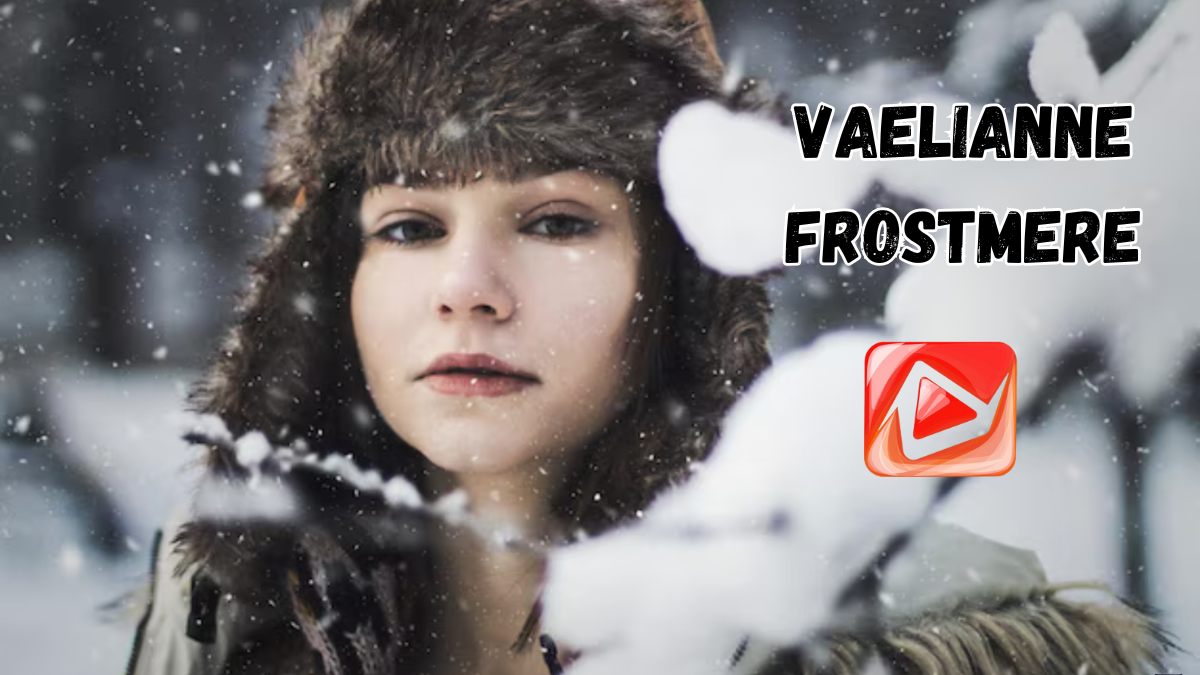
In the shadowed reaches of the far north, where glaciers whisper the secrets of ancient empires and the aurora veils the heavens like a silken shroud, a name endures in myth and memory—Vaelianne Frostmere. Not merely a tale passed through frostbitten lips around crackling hearths, she is a figure steeped in mystery, power, and tragic divinity. This article delves deep into the enigmatic world of Vaelianne Frostmere—her origins, her rise, her legacy, and how she continues to shape fantasy culture and speculative lore across genres and platforms.
The Birth of Vaelianne Frostmere: Daughter of Silence and Storm
Vaelianne Frostmere was not born in the traditional sense. Her legend claims she emerged beneath a sky lacerated by comet fire, at the heart of the Shivering Hollow—a glacial basin where no man dared linger. Elders say her first cry froze the breath of wolves, and her eyes held the clarity of starlight on black ice. The midwives who bore witness to her arrival vanished days later, their bodies found preserved like glass statues beneath translucent ice.
Unlike many other mythic figures, Vaelianne’s lineage remains unknown. No father, no mother, no ancestral tomb—only the persistent belief that she was chosen by the Primordial Cold, an ancient elemental force banished in the Elder Cataclysm. Some believe Vaelianne was the reincarnation of a forgotten winter deity; others call her the final Sentinel of the Frostbound Pact.
Her early life is largely undocumented, but oral traditions across northern tribes—especially among the Tarnari Clans of Drelmorn Fjord—tell of a girl who wandered into their camp wrapped in mist and crowned with snowflake-shaped crystals that never melted. She never spoke, not once, for the first seven years. And yet, she communicated fluently—through dreams, through visions, and through ice formations that took the shape of words.
Rise of the Iceborn Oracle
When Vaelianne Frostmere began to speak, the world changed.
At age twelve, she spoke her first words during the Festival of Endless Night—a 28-day period when the sun refuses to rise. Her voice shattered the sky, according to legend, causing the auroras to spiral downward and touch the earth. She prophesied the collapse of the Iron Reaches, a chain of dwarven forges thought indestructible. Seventeen days later, earthquakes swallowed them whole.
It was then that the clans gave her a title: The Iceborn Oracle.
Unlike other seers or prophets in northern folklore, Vaelianne Frostmere did not barter with gods or spirits. She commanded them. She walked into the Stormhall Temple—sacred ground to the storm druids of Targ’s Spine—and silenced the tempest that had howled for eight centuries. Her affinity for elemental forces became the cornerstone of her legend. She didn’t manipulate the weather—she became the weather.
She was not a queen. Not a warrior. Not a witch.
She was something altogether rarer: a force disguised as a woman.
The Paradox of Power: Frostmere’s Ethical Code
One of the most compelling aspects of Vaelianne Frostmere was her moral ambiguity. Unlike heroes molded by rigid codes or villains driven by insatiable hunger, Frostmere operated under what scholars later termed the Doctrine of Icelaced Judgment.
This code was simple but chilling:
“Let only the worthy feel the warmth. Let the unworthy become part of the silence.”
To her, justice was not restorative—it was absolute. When a chieftain of the Gauric Wolves betrayed his people for gold, Frostmere did not exile or imprison him. She turned him into obsidian ice, leaving him eternally conscious beneath the glacier he once sought to exploit.
Despite her feared judgments, she was deeply beloved by common folk. Villagers recounted stories of waking up to find a frozen child resurrected by her touch, or crops saved from ruin by an unexpected snowfall at her passing.
Vaelianne Frostmere was power incarnate—but never without purpose.
The Lost Era: Frostmere’s Disappearance and the Icewrought Silence
At the height of her influence, Vaelianne vanished.
There was no farewell, no final battle, no celestial sign. Only stillness.
After her disappearance, the Icewrought Silence began—a 100-year period of record low temperatures and magical dormancy. Sorcerers found their spells misfiring. Elemental shrines went cold. Northern tribes, once unified under Frostmere’s quiet guidance, fragmented into warring factions.
Many believed she had ascended—perhaps to the Throneless Keep of Aeon’s Edge, a mythical realm beyond the mortal coil. Others whispered darker theories: that her own power consumed her, or that she was betrayed by someone she once saved.
Regardless of the truth, her absence was felt profoundly. Even now, 600 years later, her disappearance is marked each year on Frostmere’s Fade, a day of silence observed across northern territories.
Cultural Impact of Vaelianne Frostmere
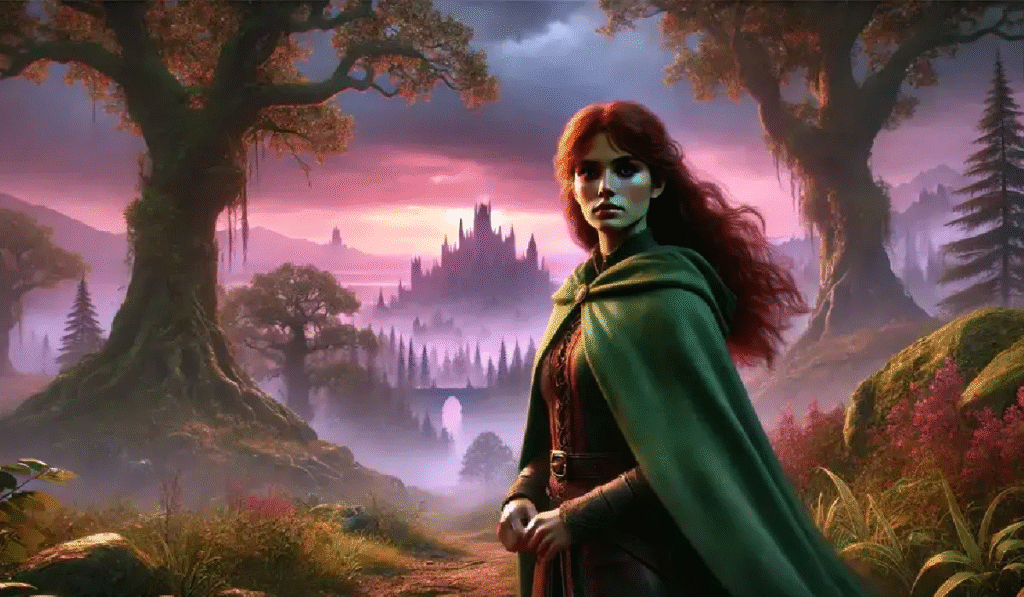
Despite her mythic status, Vaelianne Frostmere transcended folklore and entered the cultural bloodstream of multiple civilizations, both real and fictional. Here are just a few places her influence endures:
Literature
From the Chronicles of the Frozen Wyrm to Vaelianne’s Mirror, her likeness and story have inspired over 700 works of fiction. Many of these reinterpret her as a tragic anti-heroine, a deity in denial, or the lost love of some doomed wanderer.
Games and Interactive Media
In the widely acclaimed role-playing game Elder Paths: Dominion of Ash, Vaelianne Frostmere appears as a secret end-game boss, whose defeat (or salvation) determines the fate of the entire Frostveil continent. She is the only character in the game with dynamic morality scaling based on the player’s choices.
Symbolism and Archetypes
The “Frostmere Figure” has become an academic term in mythopoeic literature: a cold but just feminine force that embodies nature’s impartiality. Unlike chaotic evil or lawful good, the Frostmere Archetype challenges black-and-white morality, instead evoking awe and humility before cosmic balance.
The Myth Continues: Modern Interpretations of Vaelianne Frostmere
Today, creators, writers, and theorists continue to reimagine Vaelianne Frostmere. In speculative theology, she’s often depicted as the prototype of a neutral pantheon. In eco-critical literature, she is the embodiment of natural retribution—nature’s answer to man’s arrogance.
Contemporary feminist readings have embraced her as a symbol of restrained power and stoic leadership. Unlike the often overused “angry female warrior” trope, Vaelianne presents a woman who doesn’t have to scream to be heard, doesn’t have to fight to be feared, and doesn’t require external validation to exist meaningfully.
Rare Artifacts and Places of Worship
Even today, scattered across icy wastelands and underground libraries, exist temples and artifacts dedicated to Vaelianne Frostmere.
- The Shard of Frostmere: A blade made of celestial ice, said to never melt and hum in the presence of betrayal.
- The Veil of Thorns: A translucent cloak, believed to have been woven from her final breath, granting invisibility in snowstorms.
- The Oracle’s Basin: A frozen lake in the Gorgund Wastes where pilgrims report seeing visions of their future reflected in the ice.
Pilgrimages are common, particularly during the northern solstice. Those who claim to dream of Vaelianne often return with prophecies, songs, or sudden deaths—adding another layer to her mystique.
Conclusion: A Legacy Cast in Ice and Memory
Whether you view her as a legend, a metaphor, or a character waiting to be rediscovered in your next novel, Vaelianne Frostmere stands as one of the most compelling mythic figures in modern fantasy lore. With her mysterious origins, complex morality, and cold brilliance, she transcends the bounds of mere fiction and becomes a symbol—of balance, of power, of silence.
For more information visite the website
